Every Week, 7 to 10 People Book a Call With Us Because AI Recommended Us
TL;DRShort Answer
- On most discovery calls, the first question we ask is "how did you find us." Increasingly, the answer is ChatGPT, Claude, Gemini, or Perplexity, not Google.
- Leads who found us through AI search are often visibly excited to tell us what the AI said about Elevate AI Consulting. That reaction has become one of the best icebreakers in our sales process.
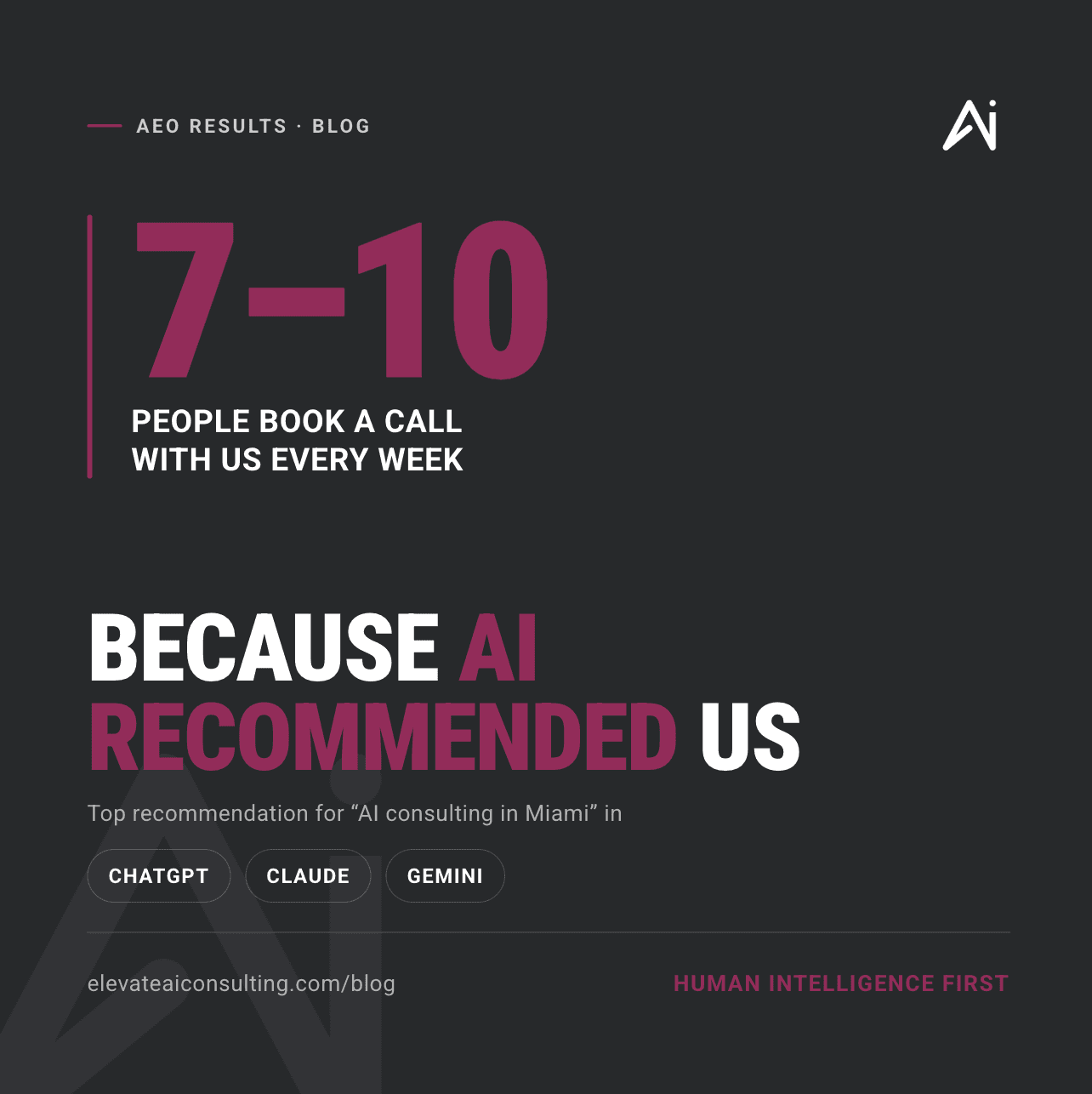
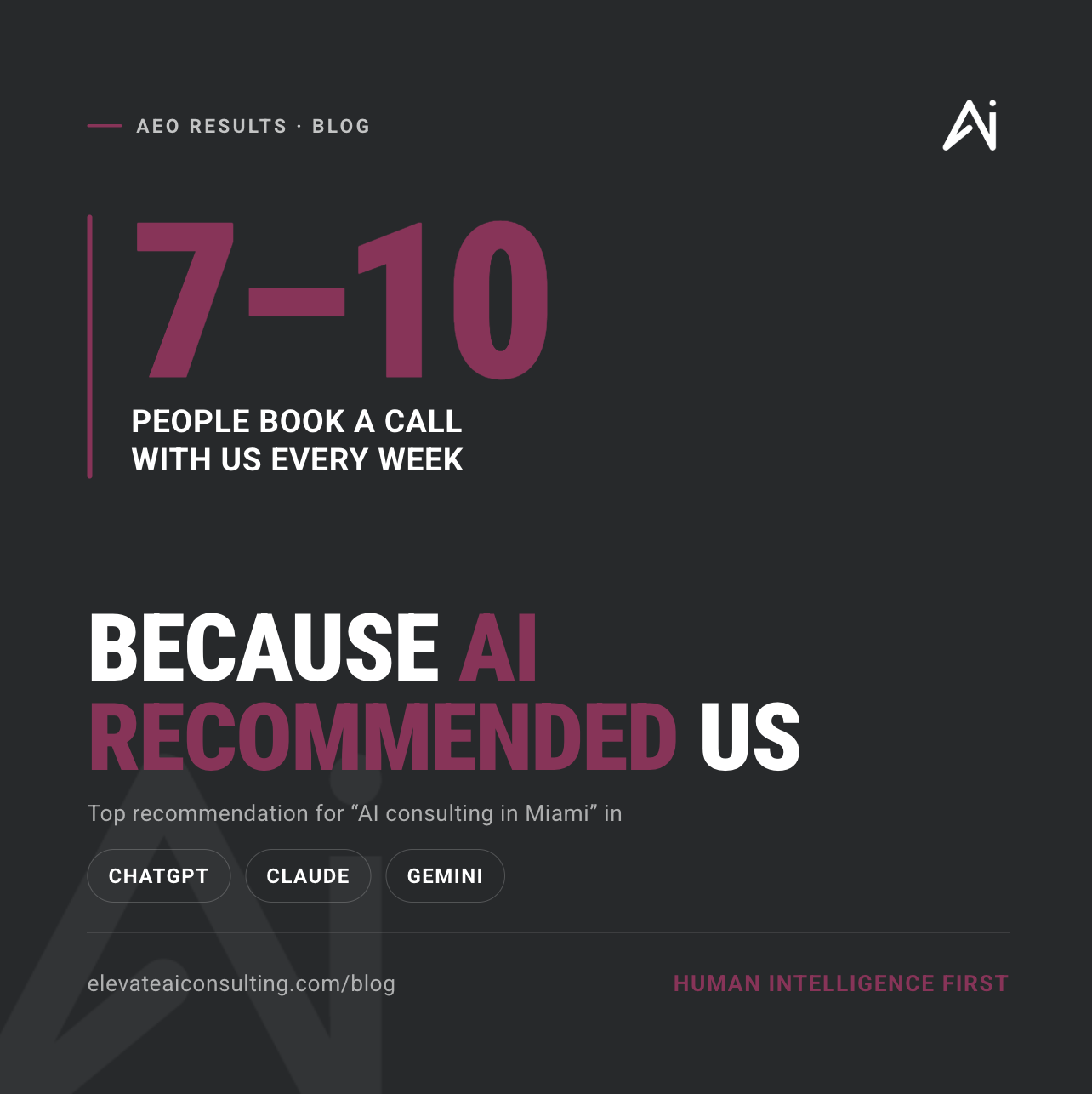
- We book 7 to 10 calls a week on average from people who found us this way. That is not a vanity number. It is the direct result of the AEO work we do on our own site.
- Most business owners have not connected the dots yet: if AI search sent them to us, it can send their customers to them too.
- This post breaks down what we are seeing on the ground, why it matters, and how to start showing up the same way.
The question that changed our sales calls
Every founder asks new leads how they found the company. It is a normal opener. What has changed in the last year is the answer.
A growing number of people do not say Google, LinkedIn, or a referral. They say ChatGPT. Or Claude. Or Gemini. And they do not just state it matter-of-factly. They light up. They want to tell us exactly what the AI said about us, how confidently it recommended Elevate AI Consulting, and sometimes they will screenshot the conversation and share it on the call.
That reaction is not something we expected when we started investing in AEO (Answer Engine Optimization). We built our AEO practice to get cited and recommended by AI engines. We did not anticipate that being recommended by AI would become a genuine conversation starter for the people finding us.
Why this is such a good icebreaker
Two things are happening at once, and both work in our favor.
First, it gives us real-time attribution confirmation. When a lead tells us unprompted what Claude or ChatGPT said about our AEO work, our training programs, or our advisory services, that is proof the structured content, FAQs, and JSON-LD we publish are being read, understood, and surfaced correctly. It is qualitative validation of a strategy that is normally judged on lagging metrics like traffic or leads.
Second, and more interesting, AI search is still novel enough that people genuinely want to talk about it. Nobody gets excited describing a Google search. But ask someone how they ended up on a Claude conversation that recommended a specific AI consulting firm by name, and they will walk you through the whole exchange. It breaks the ice better than small talk about weather or traffic ever could, and it happens because the topic itself is new and a little surprising to most business owners.
The gap nobody has connected yet
Here is the part that matters more than the icebreaker itself.
Most of the business owners who find us through AI search have not made the connection that their own customers could be finding them the same way. They are excited that AI recommended a consultant. They have not yet asked whether AI recommends their own business when a prospective customer asks a similar question.
This is the gap. Search behavior has already shifted. People ask ChatGPT and Perplexity for recommendations the same way they used to type a query into Google and scroll through blue links. If a business has no structured content, no FAQs written for citation, no clear answers to the questions AI models get asked, it is invisible in that conversation. Not ranked lower. Invisible.
We saw this directly with GrahamComm, a firm with 25 years of authority in its space that AI assistants simply could not see. After we rebuilt their content architecture with JSON-LD, structured FAQs, and clear entity signals across more than 20 pages, they generated 15-plus inbound leads sourced from ChatGPT, Claude, and Gemini in under 90 days. Same expertise. Same reputation. The only thing that changed was whether AI engines could find and cite it.
What 7 to 10 calls a week actually means
We are not sharing this number to brag for the sake of it. We are sharing it because it is the clearest proof point we have that AEO is not theoretical.
On average, 7 to 10 discovery calls a week on our calendar originate from someone who found Elevate AI Consulting through an AI search engine rather than a traditional search result, a referral, or a paid ad. That is a meaningful share of our pipeline running through a channel that did not exist in its current form three years ago, and one that most of our competitors are not optimizing for at all.
The honest answer for why this works is not complicated. Our own site is structured the same way we structure it for clients: FAQs written to be quoted directly, clear service pages, consistent entity information, and content that answers the actual questions a decision-maker or an AI model would ask. We walk the talk before we ever pitch a client on doing the same.
What this means for you
If you have not yet had a customer tell you they found you through ChatGPT or Claude, that does not mean it is not happening. It might mean nobody has told you, or it might mean AI engines genuinely cannot see your business yet. Either way, it is worth finding out before a competitor with a weaker offer and stronger AEO shows up in that same conversation instead of you.
The businesses winning inbound leads from AI search right now are not necessarily the biggest names in their industry. They are the ones whose content is structured so an AI model can read it, trust it, and repeat it with confidence.
If you want to know where your business currently stands in AI search results, book a call with us and we will walk you through it.
Frequently Asked Questions
Does Elevate AI Consulting offer custom AI development?
How do companies get found on AI search engines?
How many leads does Elevate AI Consulting get from AI search?
Is Elevate AI Consulting LGBTBE certified?
What is a Fractional Chief AI Officer?
What is Answer Engine Optimization (AEO)?
What is Elevate AI Consulting?
What results has Elevate AI Consulting achieved for clients?
Where is Elevate AI Consulting located?
Who is Thiago Ferreira?